 |
|
|
|
Tom Ballard Have Camera, Will Travel 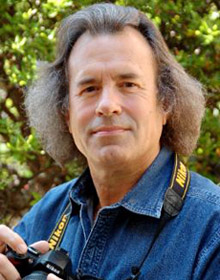
Tom Ballard I was born in Oregon in 1951, but raised in Oklahoma, and am a voting member of the Choctaw Tribe. With a degree in science/math and a teaching certificate, I followed a friend to Kansas City, Missouri, after college. There I applied for work with the federal government and was offered a job in St. Louis, which I took. That was March 1974. In November 2006 I retired as a Cartographic Analyst and began my life's dream, photographing America. I took my first photograph when I was about three years old. I still have the camera (a Brownie Hawkeye) and may still have the photo around somewhere. It was of my baby sister, who is now 53 years old. I got my own camera when I was seven years old and began snapping pictures of people and travel-related subjects - and there are thousands of them. In 1990 I gave up my hobby for other things, but resurrected my interest in 2005 when a buddy came by to show me something. That something was a digital camera, and it was awesome! I knew I was hooked again as soon as I took that first image. In a few months I had a digital camera of my own, and, as they say, the rest is history. These days, I am best known for my travel photos because I visit, as often as I can, remote places not ordinarily seen by most people. I tend to seek out places and subjects that most people miss. Through my work, I am becoming known for showing a non-normal view of the world. The ability to capture these subjects is made possible by the Canon cameras I have owned, which enable me to reveal hidden aspects of America. To get to my destinations, I take long canoe and backpack trips. I am able to bring the great outdoors to people who seldom or never get out and to show them what they are missing through my photographs. I also want to create an awareness of the beauty and greatness in our own back yard, right here in America. I also travel on cruise ships and come back with images of the voyage, posted on my Web site, that were often overlooked by the other passengers, which I think delights many. My body of work consists of many subjects. I enjoy photographing landscapes in mountainous regions of the country, but am equally comfortable capturing wildlife, people, and architecture. I like to do creative photography, as well, which I shoot a lot of when I am on the cruise ships. I have backpacked many areas of Colorado, my favorite being the Weminuche Wilderness, and explored several other western states. In July 2009, I took a two-week canoe trip on the Current River in Southern Missouri, which provided me with really nice outdoor images. I have taken lots of pictures at the St. Louis Zoo, the Missouri Botanical Garden, and Shaw Nature Reserve, an extension of the botanical garden. I have also photographed on Molokaia, Oahu, and Lanai in Hawaii, as well as Catalina Island in California. A trip through the Grand Canyon with a company named Canyoneers was the most exciting adventure I've experienced in my lifetime - a 300-mile float trip on a 37' rubber boat. But I didn't come back with photos, just great memories! It would have taken a special waterproof camera to capture quality images on a river trip like that -a job for National Geographic. I maintain a Web site for the purpose of sharing my work and what I find beautiful about America. I tend to think of myself more as a picture-taker than a photographer: I see a scene and capture it in a picture, with very little planning going into the process. I see myself still taking pictures far into the future - I'm just being a curious kid with a camera. Jonathan Wilson A Story of Love: 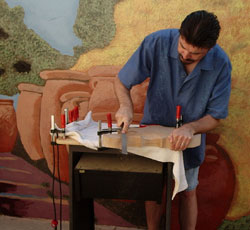
Jonathan Wilson I create GuitarViols, which are essentially morphs of Guitars and Violas. They are the modern version of the Arpeggione, which was crafted in 1823 by Austrian builder Johan Staufer. Centuries prior to the Arpeggione, there were early versions of the guitar (Vihuelas and Lutes) and of bowed guitars. They had frets and usually 6 or 7 strings. When I set out to create the modern version of this instrument, my vision was to have a more contemporary bowed guitar with features such as steel strings, which lend themselves to 20th-century guitar and bending techniques. For these modern playing techniques, a more guitar-like playing stance and underhand bow grip are necessary. And, since I seemed to be the only guy in the world to even care for such an instrument, I would build it to suit me. That was until I found a welcome "hidden" market consisting of "Art Rockers" and film composers. The unique timbre of the instrument has a rather contemporary, yet ancient, sound. My GuitarViol has been used in musical compositions in movies, including “The Day the Earth Stood Still," "Watchmen," and "300." Kevin Kliner uses his GuitarViol for “CSI Miami” and other programs, and Shawn Clement recently used his GuitarViol to re-create sounds of Saturn in "Quantum Quest." I am presently working on a record deal with a major film label. There are many excellent luthiers (guitar and violin builders) around the world, but there is virtually no one who builds my particular instrument. There is a quality which exists in a hand-built instrument. Sure, there are exceptionally made factory instruments, but the difference is they are manufactured by a committee and not singly crafted by the hands of an individual. In a factory, each worker is performing a repetitive task all day, and that worker gets very good at that task. When it is a single craftsman, on the other hand, every part of the instrument is made by his/her hands. There is a certain "soul" to that instrument which a virtually identical factory replica may not have (for better or worse.) These subtleties are usually picked up by experienced players. The "soul" or "vibe" can be unique from instrument to instrument, an inherent fingerprint of the creator and not a perfectly consistent "cookie cutter" quality of a mass-produced counterpart. (Stradivari's violins, for instance, varied one from the other.) The GuitarViol's development has been exclusively in my hands, as I own the U.S. Utility Patent, and to my knowledge, I am the only luthier in the world entirely dedicated to the bowed guitar. My overall research and development of this instrument spans three decades, and it has not been an easy journey, as such an unusual instrument, derived from a historic past, is not accepted in certain circles. Guitar builders, violin builders, and some Classical musicians find it difficult to relate to my work. I have been involved with music and art my whole life. My mother died tragically when I was three, and I had no siblings, so I pretty much had to entertain myself. Peg Wilson, my paternal grandmother, played a big role in raising me and nurtured my artistic skills, as my father was a single parent. I spent my childhood divided between California and Connecticut. "High Meadow," a 40-acre parcel of land in a remote area of South Kent, Connecticut, was purchased by my grandparents during World War II. Peg, an interior designer who wrote articles for House Beautiful magazine during the 1930s, and my grandfather, Red, an investment banker, paid $6,000 for the entire parcel and would retreat there on weekends from their home in New York City. The land was situated on a hill shared by an old iron mine, dense woods, and colonial-era stone walls, and possessed one of the most magnificent views in New England. To the west, the sun would set over a neighboring hill called Bull Mountain. Although Bull Mountain was named after the Bull family, the silhouette appeared to be that of a bull in a charging stance. In the winter evenings, the lights from a boys' preparatory school off in the distance would appear to be that of a quaint Christmas village on a Christmas card. This was the place that defined me as a person and an artisan - a beautiful locale that captured my heart and inspired my life's work. It was the one constant in my life until my father sold the property in 1994. Even though I have spent the past fifteen years in a most beautiful place, I dream every day of returning to my former home high atop a hillside in Litchfield County. My grandparents had one son and a step-daughter, Judith, my talented aunt from Red’s previous marriage who is another supportive inspiration with her excellence in pottery and varied media art. My father, Richard (also known as Dixie), enjoyed playing Cowboys and Indians as a kid with his Shetland Pony, wandering the hill. His boyhood interest developed into a love of firearms, and he and my mother, Iris, left Connecticut and went to California so he could attend the Los Angeles Police Academy. I was born in 1966 in La Crescenta, California and named after my father's close friend, Jonathan Le Farge, an accomplished guitar player. It seemed the die was cast at birth - that I would grow up to work a lifetime creating a musical instrument. After my mother passed away, my father and maternal grandmother cared for me in California. My dad was a police detective by that time. But a year after my mother's death, grandmother Bea passed away too. My father decided I should live in Connecticut with grandmother Peg, who was recently widowed, so I traveled to Connecticut with my little dog, Dee Dee, a stray Chihuahua-Terrier mix found on the California freeway when I was still in the crib. My new home was "High Meadow." I was a typical artist-type as a child. My mother wrote in letters to my grandmother, "Johnny is quite a dreamer . . . loves birds, trees and clouds." I was a different kid. This trait caused me a lot of trouble in school. I attended South Kent Preparatory School and graduated by the skin of my teeth. All I wanted to do was play my guitar, draw, and paint. Climbing Ore Hill Road to “High Meadow” on the days I had off from school was my refuge, escape, and survival tactic. I had a hopeless attachment to the guitar. When I was a teen, I was encouraged to pursue my artistic aspirations by a boarder in my grandmother's guesthouse, Harry Bennett, a Gothic novel cover artist. After graduation from prep school, I returned again to California for five years with no stability in my life, so “High Meadow” again was my salvation. Peg arranged for me to meet someone who changed my life forever. Her longtime friend, Willard MacGregor, was an abstract expressionist painter and concert pianist who was a disciple of the great Arthur Schnabel. I have happy childhood memories of Willard's visits. We painted by day, and he performed on the piano by night. I remember waking up to Willard's exuberant Bach and Beethoven renditions at the crack of dawn. One particular night I was reading a long chapter about violins in the 1948 edition of The Encyclopedia Britannica and came across a paragraph describing the "Arpeggione" (a fretted six-string cello that was tuned like a guitar and invented by Johann Staufer). That was all I needed to know. It was as if I had been struck by lightning! From that moment on, my life was forever changed. At the age of 23 I became obsessed with the dream of having my own "Arpeggione." The 1990s brought upheaval again in my life, as my father was ill and my first marriage was dissolved. I remarried and gained a stepson several years later. I worked on a prototype of my "Arpeggione" and played it until my dad's passing in 2002. It was therapy for me to work on a new version of the instrument. And it was in 2002 hat the first order was placed by a college professor in Virginia for my instrument. Since that time, I have been building GuitarViols for top film composers in Hollywood, with a typical backlog of one year or more. Never a day goes by that I do not close my eyes and remember the view of the setting sun over Bull Mountain, the ripples on the pond, the rustle of leaves blowing through the poplar and weeping willow trees. “High Meadow” is no longer my home; all that remains is a big happy memory of it. When I play my GuitarViol, my mind wanders back to a warm recollection of a New England home where I once laid in the grass next to the pond with a sweet summer breeze. “High Meadow” is now just a "state of mind." I close my eyes and I am there one more time . . . one more day. Then the dream surfaces again the next day. I know it will continue throughout my life until I walk into that last sunset over Bull Mountain. My own experiences propel me to write about my feelings in regard to preserving certain things in America. My ancestor, Benjamin Wilson of Taunton, Massachusetts, arrived here in the mid 1600s, looking for a land of great possibilities and opportunity. In our high-tech world and culture, it is all too easy to lose sight of the simple things that made this country the one that our founders were seeking to create in the first place. There are simple "old world" things worth pining for, and perhaps we should reflect on that: A time when radio, TV, computers, and other media did not rule our day. When families gathered on their porches and played music together. When pride in workmanship and creativity overruled our ambitions to expand at the expense of excellence in the "little things." When schools actually taught shop classes and the arts as "dignified" pursuits. A time when America was not "Walmarted" (cheapened) at the expense of our own skilled labor force. A time when "Invented in the USA" or "Made in the USA" meant something. A time when customer service meant customer service and not a polite conversation with an indifferent cubicle worker in India. A time when being an artist or musician was a noble pursuit and not a frivolous alternative to being a corporate puppet or high-ranking businessman. A time when school meant education and not dummied down "cubicle training." Too many Americans may never know the simple joy of walking down a tree-canopied country road absent of concrete graffiti-ridden alleys. The simple joy of climbing a ladder to the roof of a rural cottage rather than a corporate ladder. When crafting with the hands and heart actually meant something. When "substance of life" and not mere "stuff" mattered. When the simple joy of tuning up an old world instrument is a profoundly moving experience beyond that of any video game. A time when the "little things" really mattered. America should revisit its youth and re-set its compass. Chef Paul Prudhomme A Lifetime of Sharing the Bounty and Traditions of Louisiana Cooking 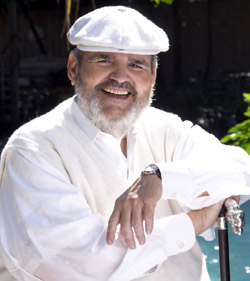
Chef Paul Some people spend a lifetime trying to find their passion. Chef Paul Prudhomme was born with it. In these modern times in America, there is an abundance of talented chefs on the culinary landscape, but there was a time when French chefs were most revered here, leaving only a handful of noted American chefs. Chef Paul Prudhomme is one of those pioneers of American culinary history. Because of his extensive body of work, he was able to reach a global audience and educate them about the Creole and Cajun culinary culture of Louisiana. Chef Paul has shown us, by his example, the true spirit of America as he worked hard his entire life to learn all aspects of his business. He was an innovator and creator, and gathered a network of associates who shared his vision and helped him to advance his interests through the years. His philanthropic work is admirable, as he believes in "giving back." Chef Paul's story teaches us an important lesson about the rewards of a lifetime of hard work. At the age of seven, in 1947, Paul Prudhomme's mother began to teach him the tradition of Louisiana cooking from their Acardiana farm near Opelousas, a community located 90 miles from New Orleans. Opelousas is one of Louisiana's oldest towns where local cuisine includes jambalaya, gumbo and crawfish. Paul is the youngest of 13 children. He learned the value of using fresh, quality products from his mother. "We didn't have electricity, which meant no refrigeration, so we used only what was fresh and in season. I learned to appreciate herbs and vegetables right from the garden, freshly slaughtered chickens, and fish and crawfish caught in nearby streams and bayous. This bounty, having my mother as my mentor, and my whole family's emphasis on the importance of my family's culinary traditions influenced me a chef," said Chef Paul. He added, "Knowing I wanted to make the preparation of food my life's work, I began to travel across the nation after completing high school. I worked in all kinds of restaurants. There were not many upscale restaurants around then – just a few in the big cities. I learned all I could about various ingredients and styles of cooking. Sometimes when I thought the food was too bland, I'd sneak in a few dried herbs and spices. When customers complimented the dishes from my station, I'd try to remember exactly what I had used but that wasn't easy, so I began keeping little notes of good mixes in my pockets. Sometimes I got caught by the Executive Chef, which didn't make me very popular." After Chef Paul's hands-on education, he returned home and soon began to build a following by working at Commander's Palace, a restaurant in the Garden District of New Orleans. Later, in 1979, Chef Paul and his late wife, K Hinrichs Prudhomme, opened the 62-seat K-Paul's Louisiana Kitchen on Chartres Street in the French Quarter. This year marks the 30th anniversary of the popular eatery. An expansion in 1995, based on the design of the original 1834 structure, added more space to make it a 200+-seat restaurant. Chef Paul still does not use freezers in the restaurant, ensuring that only the freshest ingredients continue to be used. That is why the menus are changed daily. In addition to operating his restaurant, Paul wrote his first cookbook, Chef Paul Prudhomme's Louisiana Kitchen, which was on the The New York Time's Bestseller List for many weeks. This cookbook put Chef Paul and his work in turning Louisiana cooking into a national food-trend and into the international spotlight. He produced The Prudhomme Family Cookbook soon after with his brothers and sisters and their spouses, featuring down-home recipes and accounts of cultural heritage. Other cookbooks followed, including Fork in the Road, Chef Paul Prudhomme's Pure Magic, Kitchen Expedition, Seasoned American Chef, Fiery Foods That I Love, and Louisiana Tastes. Some books were made into a public TV series and cooking videos. The PBS TV program, Chef Paul Prudhomme's Always Cooking, debuted in 2007. In the early 1980s, K-Paul's Louisiana Kitchen introduced Chef Paul's culinary invention, blackened redfish. Federal trademark records show that Paul Prudhomme claims a first use of "turducken", (a Louisiana dish featuring a stuffed boneless chicken into a cornbread-stuffed de-boned duck into a boneless oyster-stuffed turkey breast) from November 27, 1990. Chef Paul's penchant for adding spices to dishes he prepared as a youth evolved into a request for his spices when he opened K-Paul's Louisiana Kitchen. He had his staff prepare packets for diners who requested them. When demand got to be overwhelming, he decided to open a company to manufacture and market his seasonings. In 1983, a new company was born – Magic Seasoning Blends, Inc. The company now occupies 125,000 square feet, and distribution of the company's dry spices, rubs, and bottled sauces is to all 50 states and 29 foreign countries. Also, Chef Paul continues the manner in which his family smoked meats at his USDA-certified meat plant, using recipes passed down through generations of his family. Paul Prudhomme has taken "his show on the road" since 1983. K-Paul's Catering Expedition travels several blocks down the road or halfway across the world. When they travel to locales, Chef Paul and his staff (including chefs, cooks, waitresses, bartenders, and dishwashers) apply the same "Gold Star" standards as in their restaurant. They go to great lengths to buy the highest quality seafood, meats, herbs and produce from fisherman and farmers. They pack their ingredients, along with pots, pans and stoves, and often add entertainment and regional tie-ins to their presentations. Chef Paul has cooked for President Ronald Reagan's Inauguration, for various heads of state at economic summit meetings, and at congressional picnics. In the summers of 1983 and 1985 Chef Paul and company traveled to San Francisco and New York to give residents a "Taste of Louisiana." As an international ambassador, Chef Paul Prudhomme also consults with officials at restaurant chains and large food manufacturers to help them create new menu items, seasonings, or specialty dishes. Charity work is important to Chef Paul. He lends his support to charities such as Meals on Wheels, Big Brothers/Big Sisters, and programs associated with assisting the victims of Hurricane Katrina. There is a long list of honors and awards bestowed upon Chef Paul, including being named the first American-born chef to receive the coveted Merite' Agricole of the French Republic, the first chef invited to participate in the Robert Mondavi "Great Chefs of America" series, and being presented a Silver Spoon Award by Food & Arts Magazine. He has been featured in prominent magazines such as Time, Newsweek, Bon Appetit, Travel and Leisure, Playboy, and other publications. Chef Paul has appeared on TV programs including Good Morning America, Larry King Live, Late Night David Letterman, 20/20, Regis and Kathie Lee, and A&E's Biography. Paul Prudhomme says, "I feel Louisiana is one of the primary places for creative cooking in the United States. We have diverse cultures and the mixture of these cultures have had an incredible impact on the creation of unique dishes. In addition, we have a 12-month growing season. When I was a kid, we had beets and carrots and onions in the ground in January and it is still that way today. Peppers grow wild and we like hot food, so they became a staple. We stuck to the seasons. My family is of the French culture. My first ancestor arrived in 1670 into my home area. My great, great, great-grandfather didn't speak English so he kept his associations within his own culture. My family members were sharecroppers, and food became our major source of entertainment. It became part of our culture that the most important person in our neighborhood and the most important family was the one that put on the best meal. In my case, any political or social gathering always ended up at our house because my mother was such a good cook. Her greatest gift to me was to give me the tools to be able to share the value of the tradition of Louisiana cooking with the world." The Community of Elizabeth City, North Carolina A Place Where the Art of Potato Peeling is Revered In 1963, Fannie Seymour Leary of Camden County, North Carolina, peeled 8 pounds, 4 ounces of potatoes in ten minutes to impress the judges and capture the crown as overall winner of the Albemarle Potato Festival's National Potato Peeling Contest. She won $50.00, received extensive press coverage, and became a hometown hero. Today, Fannie's daughter, Pauline Berard, carries on the family tradition by helping to organize the potato peeling competition, now called the North Carolina Potato Festival. "The potato peeling contest, held on the waterfront in downtown Elizabeth City, is a major event – a tribute to the region's potato farms. Farmland along Albemarle Sound is among North Carolina's major potato-growing areas," says Pauline. "We average around 25 teams for the potato peeling contest, with four people in each team. The teams consist of a cross-section of people - firemen, politicians, U.S. Coast Guard members, realtors, college students, professors, restaurateurs. EMS is always standing by in case of cut fingers . . . and that happens." The North Carolina Potato Festival, known as “Hometown Spirit of Fun and Excitement in the Harbor Hospitality”, is held annually on the third Saturday in May along Elizabeth City's waterfront. Peggy Langley, Executive Director of Elizabeth City Downtown, Inc. and an organizer of the festival, indicates that "support of the local business and agricultural community continues to grow annually and has contributed to the success of this unique, fun-filled family event." In 2009, the event attracted 15,000 festival goers. Elizabeth City Downtown, Inc. is a nonprofit organization that administers the Main Street Program, one of over 15,000 in communities across forty states, with the shared mission of improving the viability of central business districts. Elizabeth City is located in North Carolina on the Pasquotank River, halfway between Norfolk, Virginia, and the Outer Banks of North Carolina. Its six National Register Historic Districts and proximity to the Great Dismal Swamp have made it a popular tourist destination. The Festival includes a regatta race, fly-over by the U.S. Coast Guard, free amusement rides for children, street dance, puppet shows, Moth boat races, potato sack races, and 5-K run, as well as food booths, arts and craft exhibits, and live entertainment. Deep-fried French fries are made from the pared potatoes by event volunteers and are given away free while they last. The "Anything But Fries" potato cook-off is particularly popular, as is the "Little Miss Tater Tot Pageant," a contest for girls between the ages of 6 and 7, in which the contestants wear potato-picking attire for the duration of pageant activities. This much-anticipated event has endured thanks to those who see it as a part of their community's legacy. For Pauline Berard, it is also a part of her family's legacy. Pauline recalls visiting her mother's family farm as a young girl to attend Sunday dinners prepared by "Big Mama" (Fannie's mother), where fifty family members would gather and where Fannie’s love of entertaining would be born. Pauline remembers her mother making huge pots of chicken chow mien, inviting the entire neighborhood, and typically feeding 20 to 25 guests. Fannie learned to prepare her meals with great speed. She could cook a baked potato in ten minutes without a microwave oven. With all that experience and a competitive spirit, it is easy to understand how her mother peeled potatoes as quickly as she did. Now, as a third-generation family member, Pauline is honored to be on the committee to ensure that the North Carolina Potato Festival remain an important part of the community. And as for "Aunt Fannie," as she was lovingly referred to by everyone in her community, this Southern lady with a great presence and zest for life represents an earlier time in America when the importance of keeping the traditions of the family and community intact was paramount. She had five children, 17 grandchildren and 18 great-grandchildren. In addition, she gave time to her community through her work for various service, political, and church organizations, and helped her husband run one of the Outer Bank's first motels. The Artists of SoHo Creating a Legendary Art Community While Protecting Architectural Treasures 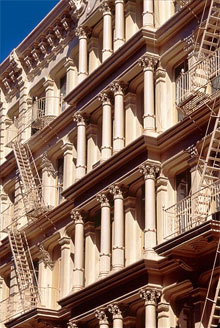
Andrew Prokos In the late 1960s and early 1970s, New York City's artists forged a new downtown community known as SoHo, the neighborhood "South of Houston Street" and North of Canal Street, located on the west side of Manhattan. They enthusiastically embraced the notion of combining residential and commercial real estate (living in their workspaces) and became pioneers who created an eclectic, avant-garde community in an area considered by many in the City's government to be urban blight. In the 1600s, SoHo was a wilderness area of grassy hills, streams, meadows, forests, and marshes. Trails through the wilderness led to Indian settlements; present-day Broadway, for example, was known as the Weckquaesgeck Trail. Dutchman Augustus Herman bought several tracts of land during this period, many of which were within what is now SoHo. The 1700s saw the development of large farms, which were later in the century divided into smaller parcels. The early 1800s was an elegant period in SoHo's history. Mostly residential, the neighborhood was inhabited by the wealthy, and soon after, the middle class. In time, there was rapid development of the area, as stately mansions and numerous business enterprises - hotels, restaurants, retail stores, theaters, gambling casinos, minstrel halls - sprang up along Broadway, the Fifth Avenue of its day. Horse drawn carriages made their way down cobblestone streets lined with gaslight lamps. As activity increased, smaller adjacent streets began to develop. Bordellos were common, and the city's first red-light district was soon established. After the Civil War, by the 1880s, million-dollar textile industries had settled in the area. The population centers shifted uptown, and industry and commerce took over, with their manufacturing buildings and warehouses dotting the landscape. There were import/export houses, trucking companies, and wholesale textile establishments. The "rag trade" took center stage in SoHo, as inexpensive clothing outlets moved to the area, many of which remain to this day. It was not until the 1950s that a new breed of settlers filtered into the area - creative, artistic individuals with imagination, a zest for living, and an economic need for low rents. At that time, SoHo's lofts, which were especially desired by artists because of their vast spaces, expansive windows, and natural lighting, were not zoned for residential living; New York City and the New York State Assembly, however, accommodated by creating special exceptions to the zoning laws. It was now possible for "starving artists" to live in their workspaces relatively inexpensively. SoHo boasts the greatest collection of cast-iron structures in the world, which adds considerably to the aesthetic of the neighborhood. Approximately 250 cast-iron buildings exist in New York City, the majority of which are in SoHo. Cast-iron, an American architectural innovation, was initially used as a decorative front placed over pre-existing nineteenth century buildings. These embellishments (less expensive than brick and stone) were much needed improvements, as new commercial clients were looking to establish their businesses in the area. SoHo is an outstanding example of inner city regeneration and gentrification, encompassing socio-economic, cultural, political, and architectural development. The SoHo loft is a concept now widely used by developers everywhere to describe this unique style of living space. Modern loft developers have expanded the idea by using fashionable materials such as hardwood floors, installing custom-designed kitchens and bathrooms, and adding fitness centers, landscaped terraces, and barbecue areas. No longer are lofts just for artists; all types of people call Manhattan lofts home. It was artists who brought the "SoHo mystique" and concept of loft-living to the fore. One such artist was Bevy Seger, a Midwesterner who, in middle-age, when artists were flocking to SoHo, decided to leave her home and head for New York City to pursue her dreams. She drove to New York with all her worldly possessions in her car and little cash. "Everyone said I couldn’t move to New York City at my age with no money," recalls Bevy. Not heeding that advice, she rented an industrial loft in SoHo and immediately got busy designing unique handbags and accessories, at times using scraps from local clothing manufacturers left in boxes by street curbs to be hauled away by refuse companies. Her resourcefulness paid off, as her creations were soon featured in Women's Wear Daily and Harper's Bazaar. With an entrepreneurial spirit, she then decided to transform some unused space in her loft into a bed & breakfast inn. In no time, Bevy's Bed & Breakfast had landed a spot in the publication New York's 50 Best Wonderful Little Hotels. Her guests have been diverse - from film producers and actors, to tourists, students, psychics, and Tai Chi masters. Bevy also created a line of postcards featuring her pen and ink drawings of the people and architecture of SoHo, accompanied by written historic documentation relating to the artwork. She wanted to share not only SoHo's history through her card line, but also the vision of SoHo that she and so many others had turned into a reality. Bevy, like many other SoHo artists, was saddened when SoHo had eventually become an enclave for the wealthy, with "some lofts renting for over $20,000 a month and selling for over a million dollars." She noted that many of the original artists who turned SoHo into such a unique community could no longer afford to live there and were forced to move to other parts of the City. Roger Brashears A Tennessee Storyteller 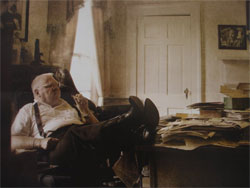
He lures you in with a story and learns from your laughter, the way you cock your head to listen, and the character of the stories you offer in return just what kind of person you are. In the course of a meandering conversation, he takes your measure and, somewhere along the way, Roger goes from calling you by the name you were given to giving you the name you've earned - your nickname. To be given a nickname by Roger Brashears is the Lynchburg equivalent to being knighted. Lynchburg, Tennessee, and Jack Daniel Distillery have a story to tell, and Roger Brashears has been telling it for over four decades. Roger is the storyteller for the remote Moore Valley town and its treasured world-famous distillery, which, as the oldest registered distillery in the United States, is on the National Register of Historic Places. Roger has held his position at Jack Daniel's for over 46 years. When he began with the company in 1963, he gained entrance as a “temp” after passing a typing test. Shortly after Roger was hired as a permanent employee, his easy-going, down-home personality and soothing voice were determined to perfectly portray the image carefully tended for Jack Daniel Distillery by Brown-Forman Corporation, the corporate owners since 1956. Roger has many titles: Storyteller, Official Historian, Spokesman, Publicist, Promotion Director, and Director of Public Relations. "I have every title you can get without getting a raise," jokes Roger. He participates in the Jack Daniel's World Championship Invitational Barbecue Contest, a two-day event held annually. Roger also hosts special guests for some "family-style cooking" at Miss Bobo's Boarding House, owned by Jack Daniel's, where he has the distinction of being its last star boarder. "I was born and raised in Oakdale, Tennessee, a town of 150 people, located 35 miles west of Knoxville. It was there that I, as a boy, began my storytelling, which is a Southern tradition," Roger comments. "I used to sit on my grandparents' front porch in a rocker with my feet on the railing and holler across to the neighbors (an activity I learned from my grandfather and his friends) with the news of the day and interesting anecdotes. Today the men in white coats would come and take you away if you did that. My first stories were about how I used to go to the river in the summertime to take baths and my daily trips to the post office two miles away. I can still remember talking about my adventurous fun on railroad tracks and the river bridge (there were no worries about safety then . . . unlike today). When I was in high school, my family moved to Harriman, a temperance haven of 15,000 people five miles down the road. I told more and more stories as I had a bigger audience, and the response was great." "Daddy was a ridge runner in the bootleg business when he met Mother. Mother reformed him, and he changed his profession to carpentry. Many years later when I took the job at Jack Daniel's and told Mother, she was not happy, but eventually accepted it. Although she never spoke about my place of employment, I found out many years later that Mother always kept in her handbag the letter Frank Sinatra had written to me, which thanked me for something I had done for Frank in my capacity as an employee of Jack Daniel's." Roger never tires of telling the fascinating story over and over again about how a young Jasper Newton "Jack" Daniel, a runaway from home at the age of six, distiller by 13, and innovator his whole life, pioneered the oldest registered distillery in the United States. Roger relates that Jack Daniel's Old #7 Black Label is today the leading seller of whiskey in the world. He points out that Jack Daniel had the foresight to move the distillery to a source of limestone water flowing from a cave spring in Lynchburg after he bought the business from Reverend Call, who took him in when he left home. Reverend Call was his mentor, teaching him about business through Mr. Jack's work in his mercantile store and also how to make good whiskey. Reverend Call came to a crossroads in his life and decided to devote all his time to his ministry, so he sold his distillery to Jack Daniel. Roger likes to relate that Mr. Jack was an independent character with a mind of his own. During the Civil War, he sold his whiskey to both sides, and when everyone else went to bottling in round bottles, Mr. Jack chose square ones. In 1904, Jack Daniel quietly took his relatively unknown whiskey to the St. Louis World's Exposition to enter it in an international spirit competition. He returned with the World's Fair Gold Medal for "Best Whiskey in the World." In the end, Jack Daniel's spirited nature got the best of him. When he had trouble with the combination to his office safe, he kicked the safe in frustration. At first he suffered just a limp, but gangrene set in, and he died from it some time later. "Jack Daniel was all of five feet, two inches tall," says Roger, "but he was the biggest man around here in his day, and he's pretty big around here right now." Although Roger's job is to share his knowledge of the history of Jack Daniel, the distillery, and Lynchburg, Roger himself has become a very important part of that history. There are vintage "Brashearsisms," such as his answer to the question, "How many people work at the distillery?" Roger's reply is "about half of us." When asked to comment on how young Jack Daniel came to live with Reverend Call, the Lutheran minister who made whiskey, Roger quips, "I guess you could say Call was Lynchburg's leading spiritual advisor." And he likes to say, "We got some good old boys down here who make barbecue sauce so good it'll make your tongue jump out of your mouth and slap your eyebrows off." Roger's comment, when asked why the company stuck so close to its roots, is, "We don't believe in kicking a pulling mule." His self-deprecating humor is evidenced as he relates how a Tennessee senator walked into his office one day and exclaimed, "You have the messiest damn office!" Roger simply laughed, as he is known for being a pack-rat with papers and memorabilia piled high on his desk and surrounding tables - that is part of the charm of Roger Brashears. "I am, and always have been, a country boy," says Roger. He has spent a lifetime in one idyllic place and raised a family there with his wife of nearly fifty years. His work, which has an element of fun about it, educates a global audience about an aspect of American history steeped in Southern tradition. Roger revels in simple pleasures, such as his annual Fourth of July family barbecue, a relaxing dinner at Miss Bobo's Boarding House, and "A Good Sip." Jackson Berkey YOU REALLY OUGHT TO WRITE A PIECE ABOUT . . . 
People are always observing situations and telling me, "You ought to write a piece about that!" My name is Jackson Berkey. At the age of five I began playing the piano and I haven't stopped. All through grade school and high school when other kids were playing outside, I was,as Richard Carpenter wrote, "home bangin' on the keys." Mostly, because the Huntingdon Music Club's Steinway grand piano was stored there, I was at the church across from my grandmother's house. On Fridays at midnight the borough police would come and calmly ask me to stop practicing. I also regularly sneaked into Oller Hall on the Juniata College campus and took it upon myself to move their Steinway D concert grand piano centerstage, turn on the concert lighting, and pretend I was playing a concert with orchestra. (I wasn't playing concertos at the time - just the Mozart "Fantasia in D Minor.") I'm now a composer and pianist and have been playing keyboards with Mannheim Steamroller for more than thirty-five years. I guess that during my formative years I must have been hearing the orchestra playing along with me since now I'm writing orchestral music without ever having studied to do so. And this brings me to Cape May. My love affair with Cape May, New Jersey, began when I was about four years old and saw the ocean for the first time. My mother had told me "it is so big that you can't even see across to the other side." Of course, I didn't believe her. When we arrived and parked the car (then very close to the shore), I ran to the ocean's edge, sure that I could prove my mom wrong. Such defiance from a four-year old! I still look hard to see if I can see the other side. Since 1998, when I returned to Cape May with my lady Almeda, I have returned to this oldest American seaside resort every January to compose music. Some years back - in an October, as I recall - we stayed at a "bed and breakfast" called Colvmns by the Sea. One glance into Room 9 on the third floor was enough to convince me that I had to return there to compose music. The mind's eye of that four-year-old boy is now memorialized in one of my CAPE MAY WINTERLUDES called "First Sighting." That memory, along with many other Cape May experiences, is permanently etched in a large number of my CAPE MAY SOLITUDES, TIME TWISTERS, ATLANTIC FANTASY, and CAPE MAY PRELUDES for solo piano: "Beach Caterpillar," "Delaware Bay Ice," "Bernadette's Salsa Egg Dish," "Torts and Tarts," "Drivin' the Parkway," "Shrimp in the Sink," "Jeffrey Piper," "Gullfriend at the Beach," "Sunset Walk," "Jazz's Blues," "1-6-3 Jig," "Night Shore Fog," "Sunday Morning Fire," "Sunrise at the Colvmns," "Irish Fiddler's Dance," "S.S. Atlantus," "Ronnie's Blues," "Foxes in Furs," "Fire and Snow," "Shuttered Closed Windows," and "Frozen Sand" - also, some now well-known choral pieces such as my "Crucifixus" from "The Towers of Sagrada Familia," "L'Ultima Amor" which was premiered at an international women's choral festival in Seattle, Washington, and my "Open the Window, Aunt Minnie, Here She Comes!" - a song cycle about baseball. With all of these titles, I've come to realize that much of the essence of this great American place is in my music, a part of our country captured in sound and imagination. I guess I really "ought to write a piece about..." |